Lonely on the sofa, next to the person you love
You are on the sofa, a couple on a normal weeknight. Your partner is right there, feet almost touching yours, scrolling. A show is on that neither of you chose. And you feel completely alone.
Feeling lonely in a relationship is one of the most confusing feelings there is. Nothing is technically wrong. Nobody cheated, nobody shouted. But the closeness you used to have has gone quiet, and you are not sure when it left.
You are not being dramatic, and plenty of couples go through this. Long-term couples, new couples, even couples who look perfect online. In this guide you will learn why it happens, 10 signs to look for, how to bring it up without blame, and 12 practical ways to reconnect with your partner.
We will also be honest about when loneliness is about you rather than the relationship, and when to talk to a professional.
Why can you feel lonely in a relationship?
Feeling lonely in a relationship happens because loneliness is not about being alone. It is about not feeling seen, known or met by the person closest to you. Small missed moments, busy routines, screens, children, stress and different needs for closeness can slowly turn a close pair into roommates, even when they still love each other.
Being alone vs feeling lonely in a relationship
Being alone is a fact: nobody else is in the room. Being lonely is a feeling: nobody seems to reach you. You can be alone and content, or surrounded by people and lonely. In a relationship, the loneliness often hurts more, because you expected that one person to reach you.
Missed bids for connection
John Gottman’s research describes “bids”: small attempts to connect, like “Look at this video” or a sigh after a long day. Partners in a couple can turn toward a bid, turn away, or turn against it. His studies found that couples who stayed together turned toward each other’s bids far more often than couples who split. Loneliness often grows from hundreds of missed bids, not from one big moment.
- Turn towardLook up, answer, engage
- Turn awayMiss it or ignore it
- Turn againstAnswer with irritation
Routine, screens, parenting and stress
Most emotional distance in a relationship is not caused by a villain. It is caused by life, and it happens to the happiest couples. Work, commutes and chores eat the evening. Phones fill every gap. Young children take every spare minute, and stress makes everyone shorter with each other.
Different Connection Types
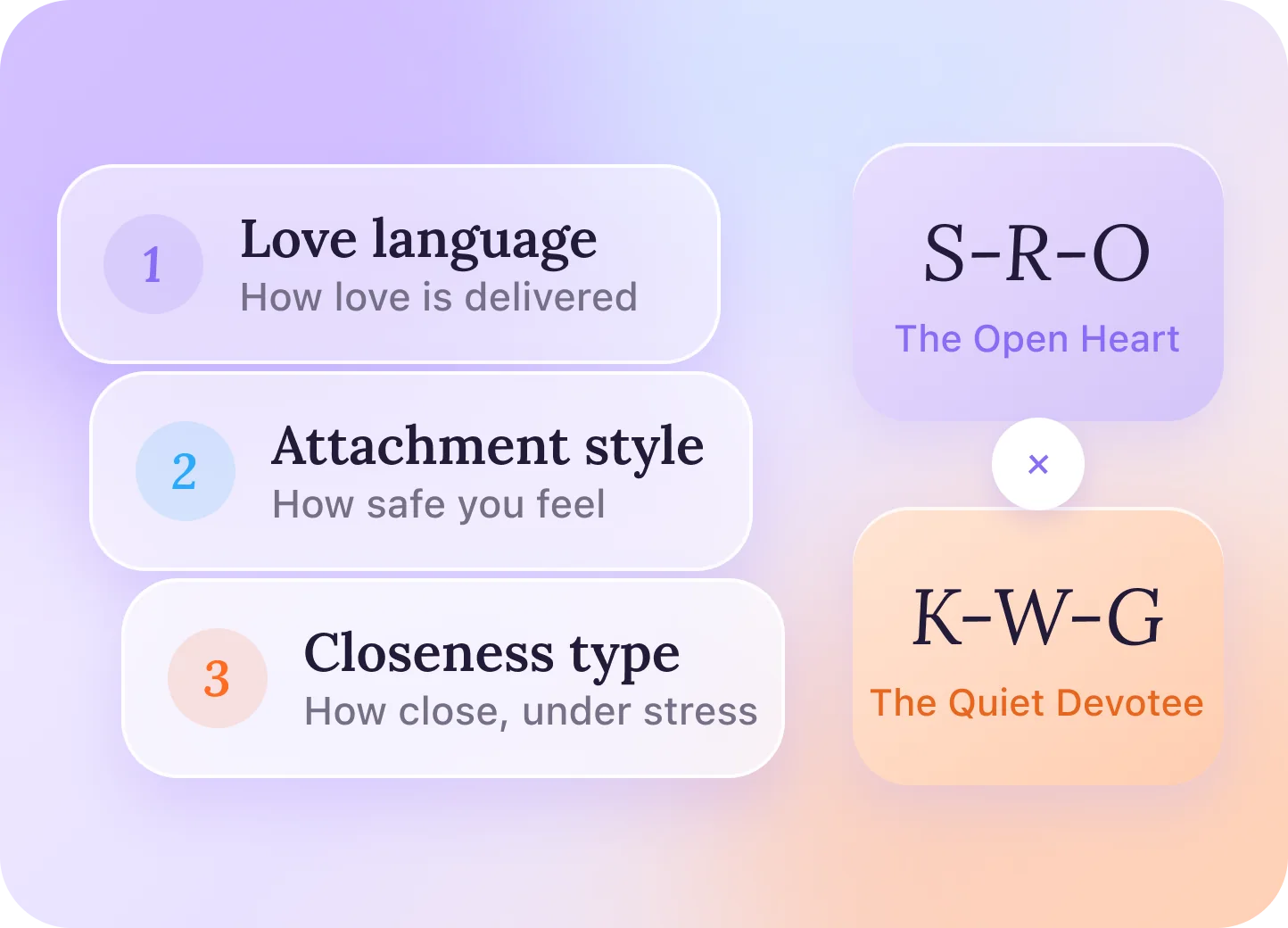
The two people in a pair often need different amounts of closeness. One may feel the gap after two busy days; the other may not notice for weeks. In 4couple’s Connection Type model, a partner on the Seeking side of the closeness axis tends to feel distance sooner than one on the Secure side. Neither is wrong. You can learn more in Your Relationship Profile, which includes the free couples quiz.
10 signs of emotional loneliness in a relationship
The clearest signs of emotional loneliness in a relationship are quiet ones: you mostly talk logistics, you share news with friends first, touch has become rare, and you feel lonelier after time together than before it. One sign on its own is normal for any couple. Several at once, for weeks, are worth paying attention to.
- 1You mostly talk about logisticsBins, bills, pickups. Like a couple running a small business, you cannot remember the last time you talked about an idea, a fear or a dream.
- 2You tell friends things before your partnerGood news, bad news, a funny moment. Your partner hears it second, or not at all.
- 3You feel lonelier after time togetherAn evening side by side leaves you emptier than an evening alone.
- 4Your bids go unanswered, or you have stopped making themYou used to share small things. Now it hardly seems worth it.
- 5You do not know what is on their mindIf someone asked what is worrying your partner this week, you would be guessing.
- 6Touch has become functionalA peck goodbye, a hand passing a plate, the touch of a couple on autopilot. Affection for its own sake has faded.
- 7You keep feelings to yourself to avoid a sceneIt feels easier to say nothing than to risk a fight or a shrug.
- 8You imagine being understood by someone elseNot necessarily an affair. Just a wish that someone, anyone, would really get you.
- 9Screens fill every quiet momentDinner, bed, the car. A phone is always the third person in the room.
- 10You live parallel livesSeparate schedules, separate shows, separate evenings, like two flatmates rather than a couple. It works, but it no longer feels like being a pair.
A quick self-check if you are feeling lonely in a relationship
Use this table to turn a vague feeling into a first step for you as a couple. It is not a diagnosis, just a way to name what you notice.
| Sign you notice | What it may point to | A first step |
|---|---|---|
| Mostly logistics talk | No couple time set aside just for the two of you | 15 phone-free minutes after dinner, three times this week |
| Telling friends first | Your partner feels less safe or less available to share with | Tell your partner one small thing first today |
| Unanswered bids | Busy, distracted or tired attention | Name it gently: “I’d love it if you looked up when I share stuff” |
| Not knowing their worries | Your picture of their inner world is out of date | Ask one real question tonight, then just listen |
| Functional touch only | Affection has slipped down the list | A long hug when either of you comes home |
| Hiding feelings | Fear of conflict or of being dismissed | Practise one “I feel” sentence before saying it |
| Parallel lives | Routines have drifted apart | Plan one shared activity this weekend |
How do you tell your partner you feel lonely without blaming them?

To tell your partner you feel lonely without blame, describe your feeling and what you miss, not what they do wrong. Pick a calm moment, start with “I”, name the feeling, and end with a small, specific request. “I’ve been feeling lonely lately, and I miss us” opens a door. “You never pay attention to me” closes one.
This follows the shape of Marshall Rosenberg’s Nonviolent Communication: what you noticed, how you feel, what you need, and a request.
 Instead of this“You never pay attention to me.”
 Try this“I’ve been feeling lonely lately, and I miss us.”Instead of this“You care more about your phone than me.”Try this“When we’re both on our phones at dinner, I feel far away from you. Could we try dinner without them this week?”Instead of this“We’re basically roommates now.”Try this“I miss how we used to talk. Could we do something just the two of us on Saturday?”Instead of this“You don’t even know me anymore.”Try this“I feel like we haven’t really caught up in a while. I’d love to hear what’s on your mind.”
A few tips make the conversation land better:
How to reconnect with your partner: 12 ways that work
The best way to reconnect with your partner is through small, repeated moments rather than one grand gesture. Start with daily habits that take minutes, add one weekly ritual, and save bigger changes for later. These 12 ideas build on well-known relationship research, and most couples can start them this week.
Small daily habits
- 1Make a real greetingStop what you are doing when your partner comes home. A proper hug or a six-second kiss, a ritual John Gottman recommends, says “I’m glad you’re here.”
- 2Keep 15 phone-free minutesSame time each day, phones in another room. Talk about anything except logistics. Many couples find after-dinner works best.
- 3Ask one real questionNot “How was your day?” but “What was the best part of today?” For questions for couples that go deeper, borrow from our 100 Deep Questions to Ask Your Partner to Feel Closer.
- 4Turn toward one bidWhen your partner shares something small, put the phone down and respond. That is how to feel closer to your partner in seconds.
- 5Say one specific thank you“Thanks for making coffee” beats a general “You’re great.” Specific appreciation shows you are paying attention.
Weekly rituals
- 6Have a real dateNot dinner with phones out. Something you both chose, at home or out. Our date night ideas posts have plenty for couples to steal.
- 7Hold a weekly couple check-inGottman’s “state of the union” idea: start with appreciations, then each share one thing that would help you feel closer next week.
- 8Try something new togetherA class, a new walk, a recipe neither of you knows. New experiences shared as a couple tend to bring back the early sense of discovery.
- 9Take a walk and talkSide by side is easier than face to face for many couples, especially partners who find eye contact intense.
Bigger moves
- 10Revisit your shared dreamsWhere did you want to live, travel, be in five years? Check which of those you still want as a couple.
- 11Learn each other’s love language and Connection TypeGary Chapman’s love languages explain how each of you feels loved. Knowing them helps you aim your effort.
- 12Plan a day with no logisticsNo errands, no family obligations. Just a day that belongs to the two of you as a couple.
Want the long view? How to Be a Better Partner covers the habits that keep a relationship close over years.
What if your partner does not respond?

If your partner does not respond, do not assume they do not care. Many people go quiet because they feel criticised, overwhelmed or unsure what to do, and it happens in plenty of couples. Give it time, ask what is going on for them, keep making small bids, and look after your own support. If nothing changes over weeks, consider a qualified couples counsellor.
If you feel afraid of your partner, or they control who you see or what you do, that is not loneliness to fix with date nights. Please reach out to a local support line or a qualified professional.
When loneliness is about you, not the relationship
Sometimes the loneliness is not mainly about the relationship. Moving city, losing friends, a new baby or a job change can leave you feeling empty, and a partner cannot fill that alone. If low mood has lasted a couple of weeks or more, talk to a doctor or a qualified mental health professional.
Some honest questions to ask yourself:
None of this means the relationship is fine and you are the problem. Often it is both. But seeing your own part clearly makes the conversation with your partner easier. If you ever have thoughts of harming yourself, contact emergency services or a crisis line right away.
How 4couple helps when you feel lonely in a relationship
4couple is an AI relationship app for couples that helps partners notice drift early and reconnect through daily check-ins, shared questions and gentler ways to say hard things. Once you are paired in the app with a pairing code, these features work together for the couple, not just for one partner.

Daily mood check-in and widgets: see the drift early
The daily mood check-in is a quick daily check-in for both partners. You see how your partner feels and can track patterns over weeks, so a slow slide becomes visible. A daily mood check in takes seconds, which is why paired couples tend to keep it up. Your partner sees your mood too, which means “I’m not okay” no longer has to be said out loud first. Home screen widgets can show your partner’s mood, your next date and countdowns.

Signals: one tap instead of a hard sentence
Some evenings you cannot find the words. Signals let you send “I want to feel closer tonight”, “I need a hug” or “I need a little space” with one tap. For a partner who goes quiet when lonely, that small signal can be the first bid in days, and your paired partner sees it right away.

Translate My Emotions: say “I feel lonely” without blame
If what comes out is “You never even look at me anymore,” paste it into Translate My Emotions. You get a 2-4 sentence version in your own voice: what happened, how you feel, what you need and a request. You can copy it, edit it or ask for a softer version. It never sends anything for you.

Question of the day and “Let’s talk about”: reasons to talk again
The question of the day gives every paired couple one shared question daily. Both partners answer, and you see your partner’s answer after you answer. It is the easiest way to restart real conversation. When you are ready to go deeper, “Let’s talk about” guided conversations cover topics like personal space, future plans and intimacy: both partners answer the same questions privately, then read each other’s answers.

AI Companion: a private place to understand it first
Sometimes you need to understand the loneliness before you talk about it. The AI Companion is a private chat, never visible to your partner. You can untangle whether it is about the relationship, about your week, or both, and work out what you want to ask for.

Connection Type: why one of you feels the gap sooner
The Connection Type quiz is six statements and places each partner in one of eight types, such as The Tender Pursuer or The Steady Anchor. If one of you leans Seeking on closeness and the other Secure, it explains why one partner in the pair feels the gap sooner. Plenty of couples find that this alone takes the blame out of the conversation. Paired with your love language, it forms your Relationship Profile.
What we deliberately do not do
 4couple is a couples app, not a clinic.
- We do not give you clinical labels, and the app never sends a message for you.
- Nothing from either partner’s private AI Companion conversations ever appears to the other partner.
- And no relationship app is a replacement for professional help when you need it.
Frequently asked questions
Is it normal to be feeling lonely in a relationship?
Yes, very. Feeling lonely in a relationship is common, especially during busy seasons like new jobs, moves or young children. It usually means the connection needs attention, not that the relationship is over. The key, for any couple, is noticing it early and naming it gently to your partner, before distance becomes the new normal.
What causes emotional distance in a relationship?
Emotional distance in a relationship usually builds from small things: missed bids for connection, routines that leave no time together, screens, stress and parenting. Different needs for closeness also play a part, since one partner often feels the gap before the other. Rarely is there one single cause, which is why small daily habits help most couples.
How do I tell my partner I feel lonely?
Choose a calm moment and talk about your feeling, not their faults. Try: “I’ve been feeling lonely lately, and I miss us. Could we spend some time just the two of us this weekend?” Start with “I”, keep the request small and specific, and ask how they have been feeling too.
How do you reconnect with your partner after feeling disconnected?
If you are feeling disconnected from your partner, start small as a pair: 15 phone-free minutes a day, one real question, a proper greeting and responding to their bids. Add a weekly date or check-in. Learning how to reconnect with your partner is about repetition, not a single big gesture.
Can you feel lonely in marriage even if you love each other?
Absolutely. Feeling lonely in marriage often happens alongside real love, because love and closeness are not the same thing. Closeness needs time, attention and conversation, and long-term couples can lose those without noticing. The love is usually still there. The daily connection between the pair of you is what needs rebuilding.
Is there an app that helps couples who are feeling lonely in a relationship?
Yes. 4couple is an AI relationship app for couples that helps partners notice drift early and reconnect through daily check-ins, shared questions and gentler ways to say hard things. It includes a daily mood check-in, a question of the day, signals and Translate My Emotions. It is not therapy and does not replace professional help.
When should I talk to a professional about feeling lonely in a relationship?
Talk to a qualified professional if loneliness lasts for months despite real effort, if conversations go nowhere, or if your low mood has lasted a couple of weeks or more. If your partner controls, threatens or frightens you, contact a local support line. If you have thoughts of self-harm, contact emergency services or a crisis line straight away.
The research and frameworks behind this article, and where to read more:
- Zach Brittle, The Gottman Institute: Turn Towards Instead of Away. John Gottman’s research on bids for connection and turning toward your partner.
- Center for Nonviolent Communication: cnvc.org. The organisation founded by Marshall Rosenberg, author of Nonviolent Communication: A Language of Life.
- Gary Chapman: The 5 Love Languages. The official site for the five love languages.
- Arthur Aron and colleagues (1997): The Experimental Generation of Interpersonal Closeness, Personality and Social Psychology Bulletin. The “36 questions” study on closeness through mutual self-disclosure.
This article is general information, not therapy or medical advice. 4couple is a relationship app, not a replacement for a qualified professional. If you feel unsafe in your relationship, contact a professional or your local support line.

Writes about everyday relationship communication and how couples use 4couple day to day.

Turns relationship research into practical guides couples can use the same evening.